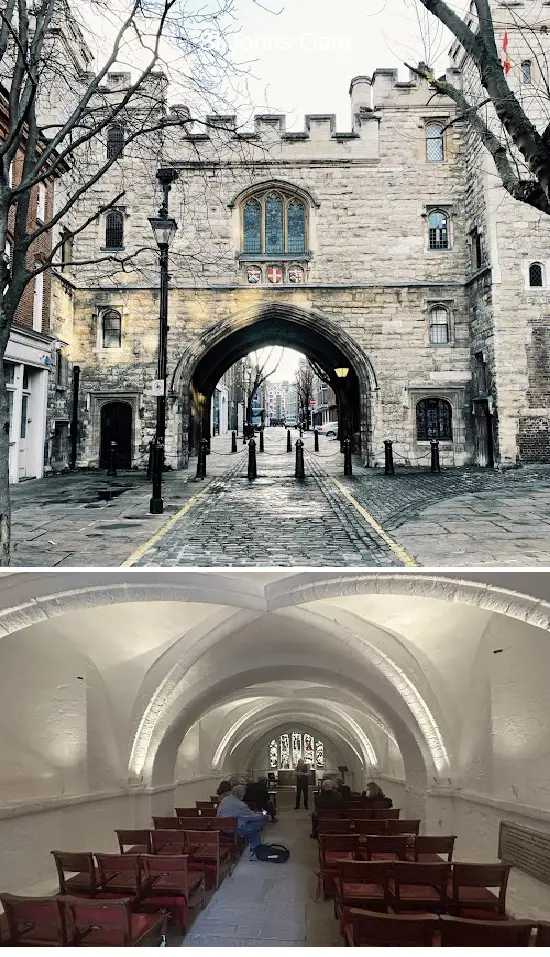
5 /5 Petros Dallas: Stumbling upon St John’s Gate felt like discovering a glitch in the modern London matrix. As I walked from the sleek, busy corridors of Farringdon, the sudden sight of this imposing Tudor stone archway—built in 1504—instantly transported me back to the era of knights and priories. It stands as a defiant remnant of the Order of St John, and passing under its heavy arch, you can almost hear the echo of horses on cobblestones.
I chose to visit because I was hunting for "hidden London" away from the usual tourist traps of Westminster. It turned out to be a brilliant decision. I spent my time exploring the Museum of the Order of St John, which is tucked inside the gatehouse. The collection is surprisingly rich, mapping the history of the Knights Hospitaller from their crusading origins to the modern-day St John Ambulance.
What I loved most, however, was the Cloister Garden. It is a quiet, fragrant sanctuary filled with medicinal herbs that the monks once used for healing. If you’re lucky enough to catch a guided tour, you get to climb the narrow stairs into the historic rooms above the gate—spaces once occupied by Samuel Johnson and even used by Shakespeare’s Master of the Revels. It is a rare, atmospheric gem that offers a deeply personal connection to London’s layers of history, all without the overwhelming crowds.