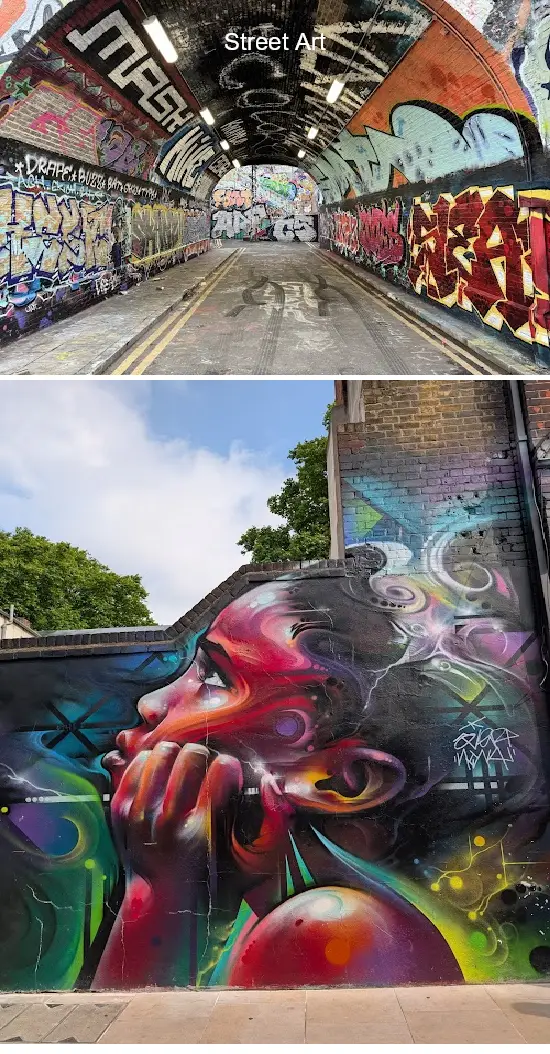
5 /5 Laxman Thapa: Street art has garnered significant acclaim for its ability to transform urban landscapes and foster a deeper connection between art and the public. By bringing vibrant, large-scale artworks into everyday environments, street art democratizes creative expression, making it accessible to all, regardless of socioeconomic status or background. It often serves as a powerful vehicle for cultural and social commentary, reflecting the unique identity and concerns of local communities. This form of art also revitalizes neglected urban areas, turning them into visually engaging and dynamic spaces that attract both residents and tourists. This not only enhances the aesthetic appeal of cities but also stimulates local economies by drawing visitors and supporting nearby businesses.
Furthermore, street art fosters a sense of community pride and ownership. Many projects involve collaboration between artists and local residents, leading to stronger community bonds and a shared sense of accomplishment. The creative freedom inherent in street art encourages innovation and the exploration of new artistic techniques, challenging traditional boundaries and expanding the possibilities of artistic expression. In summary, street art enriches the cultural fabric of cities, providing both aesthetic and social value while making art an integral part of daily life.