5 /5 Gadfield Knighton: If you ever have the opportunity to travel to England, you should make time to visit Highgate in North London—a place where I spent the greater part of my life, from my schooldays through my working years until the late 1980s. It is an area steeped in history, quiet dignity, and a distinctly English sense of culture.
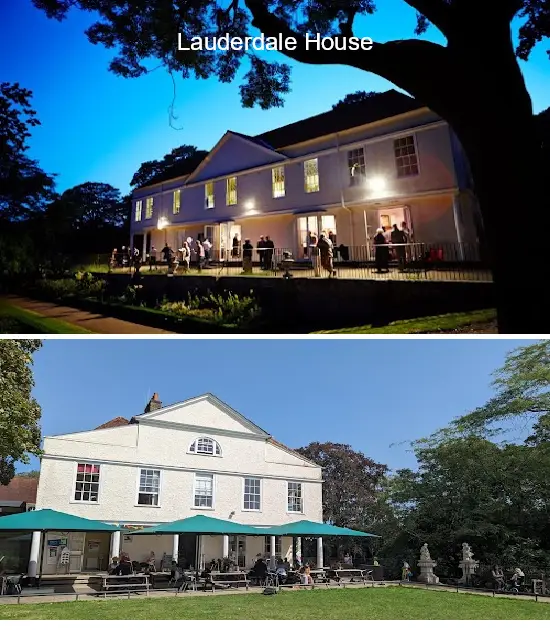
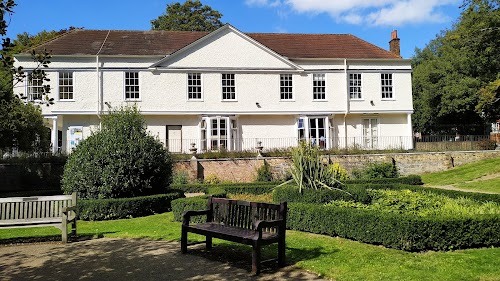
At the heart of Highgate lies Waterlow Park and the grounds of Lauderdale House, the former home of Sir Sydney Waterlow. During my childhood, Lauderdale House stood as one of the finest country houses in Highgate. Originally built in 1582 for Richard Martin, Lord Mayor of London, it began life as a timber-framed house and has evolved through centuries of remarkable history.
As a child, my mother, sisters, and I would often visit the park when the weather allowed. In those days, Waterlow Park featured a bandstand, and it was not uncommon to hear performances by British Army bands, local brass ensembles, and even the Salvation Army. Visitors—ourselves included—would sit on deck chairs or stretch out on the grass, listening to brass bands and violin concerts. I often wonder whether these performances still take place today; if they do, I can think of few experiences more refined or more emblematic of Highgate’s civilized cultural life.
Entering Waterlow Park from Dartmouth Park Hill, near the lodge, there was a path we children would race along to reach the small zoo. Back then, it housed birds and small monkeys—simple attractions, but endlessly fascinating to young minds. Sadly, those are long gone. The space is now occupied by public toilets, which, I think most would agree, lack the charm and welcome of squirrel monkeys and exotic birds.
Lauderdale House itself passed through many notable hands. In the early 17th century, it was occupied by Sir Henry Hobart, who later built Blickling Hall in Norfolk, now a National Trust property. The house was subsequently owned by William Geere, silkman to Queen Henrietta Maria, who sold it to Mary, Countess of Home. She extended the property, and in 1645 it passed to the Earl of Lauderdale through his wife Anne Home—hence the name by which the house is still known.
In 1666, Lauderdale House received distinguished visitors, including King Charles II and Samuel Pepys, and it is said that Nell Gwyn briefly lived there in 1670. Later, it became the home of Sir William Pritchard, Lord Mayor of London.
The house was remodeled in a neoclassical style in 1760, and in 1782, Methodist founder and Minister John Wesley preached there. For a time, it was home to James Yates, antiquary and Unitarian, who retired to Lauderdale House to enjoy what he described as years of “learned leisure,” surrounded by a noble library and fine works of art. He died there in 1871.
In 1872, the house became a convalescent home for St Bartholomew’s Hospital, and in 1882, its owner, Sir Sydney Waterlow, the renowned printer and philanthropist, donated the house and grounds “for the enjoyment of Londoners.” Today, Lauderdale House stands as a Grade II listed building, a testament to centuries of English history, generosity, and cultural life.
A visit to Highgate—and especially to Waterlow Park and Lauderdale House—is not merely a walk through green space, but a journey through time. It remains, to my mind, one of North London’s most quietly rewarding treasures.